Gold Price History — 50 Years of Price Data & Key Milestones
Gold has been money for over 5,000 years, but its modern price history begins in 1971, when the US abandoned the gold standard. Since then, gold has risen from $35/oz to over $2,700 — a journey shaped by inflation, crises, wars, and shifting monetary policy.
Gold Price — 50+ Year Chart
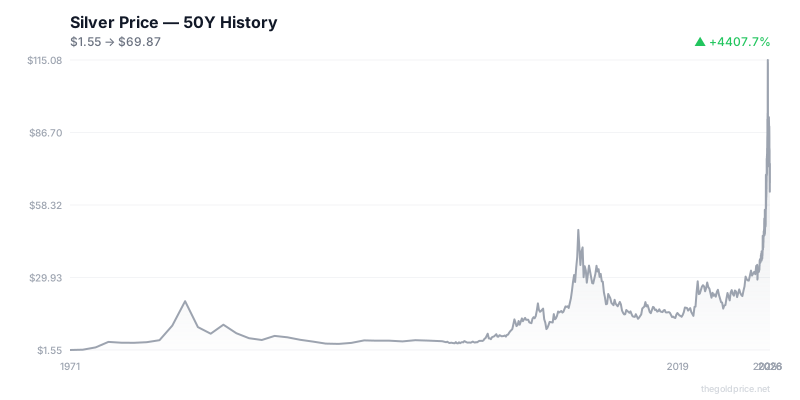
1971–present (USD/oz)Silver Price — 50+ Year Chart
1971–present (USD/oz)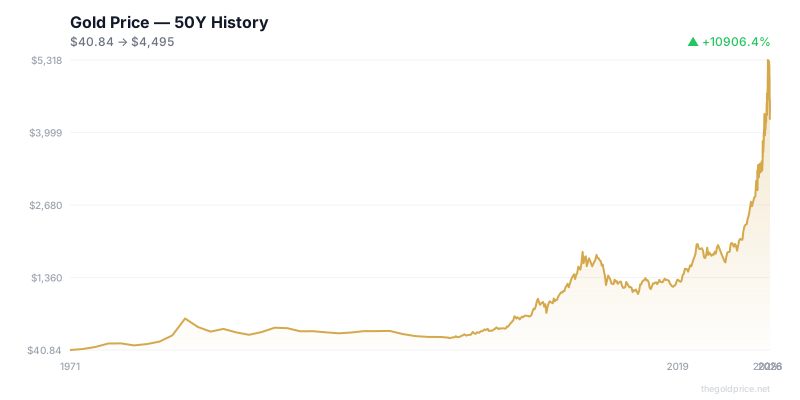
The Gold Standard Era
For most of modern history, the gold price was fixed — set by governments as the basis for their currencies:
| Period | Fixed Price | System |
|---|---|---|
| 1834–1933 | $20.67/oz | US Gold Standard |
| 1934–1971 | $35.00/oz | Bretton Woods (FDR revaluation) |
Under these systems, every US dollar was backed by a fixed amount of gold. Citizens could (until 1933) exchange paper money for physical gold at the bank.
1971: The Nixon Shock
On August 15, 1971, President Nixon ended the convertibility of the US dollar to gold. This single act unleashed gold from its $35 peg and began the era of free-floating gold prices.
By December 1974, gold had risen to $183/oz — more than 5x its fixed price. The genie was out of the bottle.
1980: The First Great Spike
A perfect storm of factors pushed gold to its first major peak:
- Stagflation: Inflation hit 14.8% in the US
- Iran hostage crisis and Soviet invasion of Afghanistan
- Oil embargo fallout — energy prices tripled
- Hunt Brothers attempted to corner the silver market
January 21, 1980
$850/oz
Inflation-adjusted: ~$3,200 in 2024 dollars
Fed Chair Paul Volcker then raised interest rates to 20%, crushing inflation — and gold. The price collapsed 65% over the next two years.
1980–2000: The Long Bear Market
Gold spent 20 years in a bear market. Strong economic growth, low inflation, the dot-com boom, and central bank gold sales all weighed on prices.
July 1999 — Multi-Decade Low
$252/oz
Down 70% from 1980 peak. Many declared gold "dead."
2001–2011: The Bull Run
Gold's greatest bull market — a decade of nearly uninterrupted gains:
9/11 attacks, war on terror begins
Dollar weakness, rising commodities
Financial crisis — Lehman Brothers collapses
First close above $1,000. Massive QE begins
US debt ceiling crisis, European debt crisis
Total return: +600% in 10 years. Key drivers: falling rates, dollar weakness, quantitative easing (QE), and surging investment demand.
2011–2019: Consolidation
After the 2011 peak, gold entered a multi-year correction. The Fed began tapering QE and eventually raised rates in 2015. Gold bottomed at $1,050 in December 2015, then slowly recovered.
By mid-2019, gold had climbed back above $1,500, driven by US-China trade tensions and the Fed pivoting back to rate cuts.
2020: Pandemic and Beyond
COVID-19 triggered unprecedented monetary stimulus — zero rates, trillions in QE, and government spending. Gold surged to a new all-time high:
August 6, 2020
$2,075/oz
New all-time high (at the time)
Gold then consolidated as the Fed began aggressive rate hikes in 2022 (0% to 5.5%). Despite higher rates — typically bearish — gold held above $1,600, supported by massive central bank buying.
2024–2026: New All-Time Highs
Gold broke out to new records in 2024, driven by:
- Central bank buying: Record purchases by China, India, Poland, and others
- De-dollarization: Countries diversifying reserves away from USD
- Geopolitical tensions: Multiple global conflicts
- Rate cut expectations: Markets pricing in Fed easing
- Debt concerns: US national debt surpassing $35 trillion
2024 Peak
$2,790/oz
Multiple new all-time highs throughout the year
Key Takeaways
Gold is a long-term store of value
From $35 in 1971 to $2,700+ in 2024 — gold has outpaced inflation over every multi-decade period.
Crises drive spikes
Every major gold rally was triggered by a crisis — inflation, war, financial panic, or pandemic.
Bear markets happen
Gold can fall 30-65% and stay down for years. Patience is required.
Central banks matter
Central bank buying has become the dominant demand driver since 2022.
Gold is not just a US story
Gold hit all-time highs in virtually every currency in 2024 — not just USD.
Check the current gold price to see where we are today, and learn about the forces moving prices in our What Drives Gold Prices article.